













When temperatures spike on a July afternoon in Phoenix, it’s not uncommon for local garages to reach temperatures of more than 110°F. Without proper insulation and ventilation, the air trapped inside your garage can climb well past the temperature outside and warp belongings, strain hardware, and make the surrounding rooms feel significantly warmer.
Thankfully, there are several ways to lower your garage temperature and keep it cool through the Arizona summers. Discover how to keep your garage cool with insulation, sealing, and other upgrades below.
Why Do Garages Get So Hot During Arizona Summers?
Most garages in Phoenix, Scottsdale, and surrounding Maricopa County areas were built unconditioned, causing them to heat up faster than the rest of your home. They often have no air conditioning, minimal insulation, and large areas that get exposed to direct sun on hot summer afternoons.
Once heat enters your garage, it has nowhere to go and continues to build throughout the day. Concrete slabs absorb warmth throughout the day and radiate it back after sunset, which is why your garage can still feel scorching hot even after outdoor temperatures begin to cool.
The orientation of your garage can also affect its temperature. West-facing garages that are common in Valley subdivisions take on direct afternoon sun during the hottest hours of the day, absorbing more heat than other layouts.
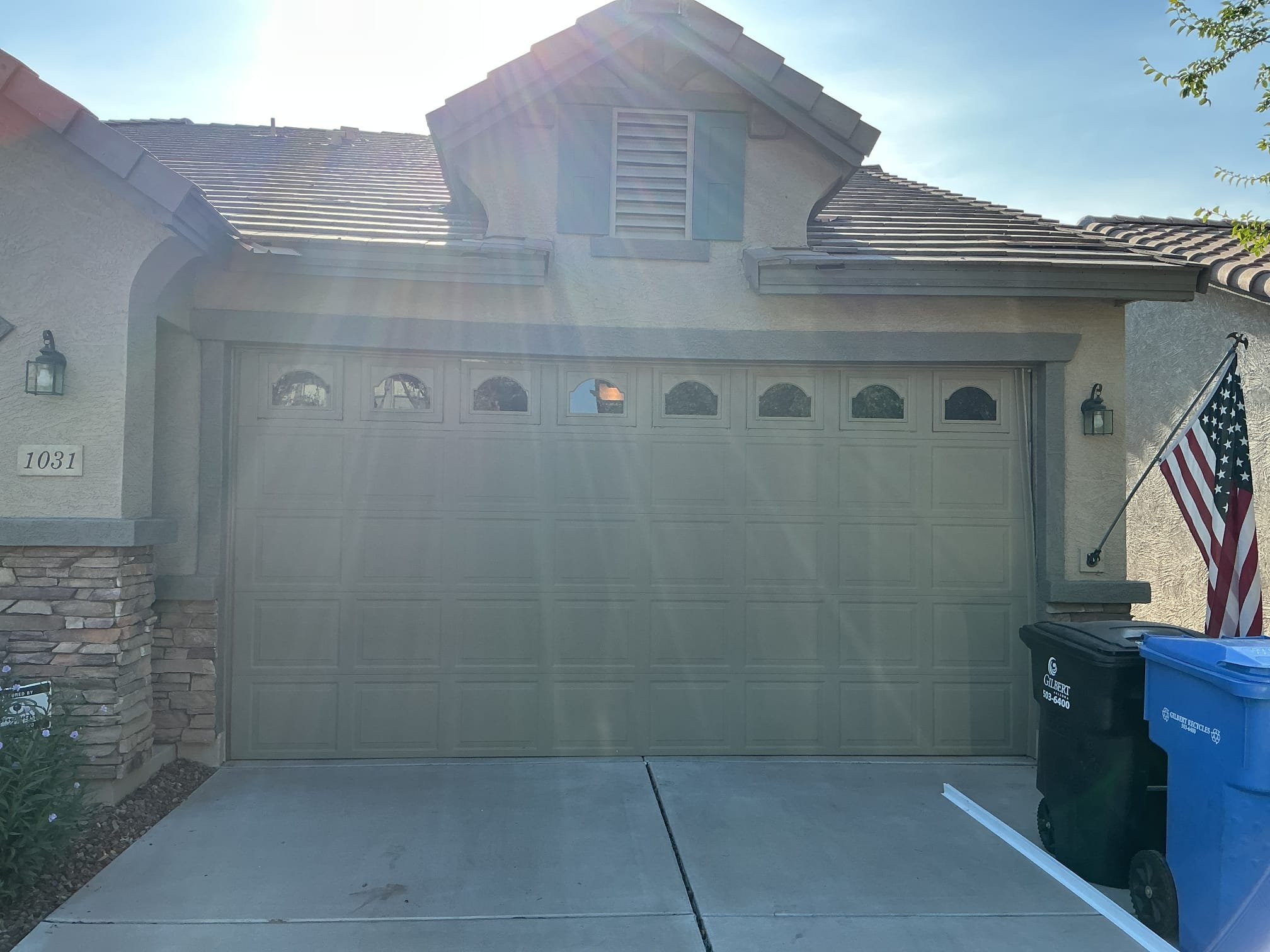
How Your Garage Door Contributes to Heat Gain
Your garage door is often the largest opening in your entire home, while being the least insulated. Standard single-layer steel doors act as a giant heat collector, absorbing solar radiation throughout the day and conducting it straight into your garage. With heat constantly radiating into the space, it can quickly raise the temperature inside and counteract any cooling efforts you make elsewhere.
Gaps or cracks around the door can also make things worse, with worn weatherstripping and seals allowing hot outdoor air to flow into your garage without resistance. On Arizona’s windy monsoon-season days, it is especially easy for leaks to pull in hot, dusty air all afternoon long.
Upgrade to an Insulated Garage Door for Better Temperature Control
Upgrading to an insulated garage door is one of the best ways to cool a garage. Instead of a single sheet of steel, insulated doors layer polystyrene or polyurethane between panels to slow down heat transfer from outside to inside.
Curious if garage door insulation is worth it? Arizona garage door insulation performance is measured by R-value, with higher numbers offering better resistance to heat flow. Homeowners who upgrade to a higher R-value door can see a 10 to 20 degree difference during peak summer months.
Another benefit of insulated garage doors is that they’re stiffer and more resistant to denting, helping to protect against damage and lessen noise from the street. If your garage sits below a bedroom or shares a wall with a living space, the benefits can also carry into your home, reducing cooling costs and improving overall comfort.
Check for Air Leaks Around Your Garage Door
Checking and sealing air leaks around your door offers a hot garage solution for Phoenix homeowners who don’t want to invest in a complete replacement. To spot hidden leaks, stand inside your closed garage on a bright day and look for daylight peeking in around the edges of the door. Anywhere the light gets through, hot air does too.
The bottom seal, side and top weatherstripping, and panel joints of your door are the most common areas where leaks develop. Arizona’s dry heat and intense UV exposure can crack rubber along the bottom of the door, degrade molding, and wear out hinges. Sealing these areas helps stop the constant exchange of superheated outdoor air to keep your garage cool, and keeps dust, monsoon debris, and scorpions out of your space.
Improve Garage Ventilation to Remove Trapped Heat
With nowhere for heat to escape, even a well-sealed, insulated garage can turn into a sauna on a Phoenix summer day. Improving your garage’s ventilation gives that trapped heat somewhere to go and keeps air moving throughout the day.
Common garage ventilation solutions include installing roof and wall vents on opposite ends of the space, which allows rising hot air to exit and keeps cool air flowing in. Thermostat-controlled exhaust fans offer even more power, kicking on automatically when the garage hits a set temperature to push hot air out before it builds up.
Consider Adding Insulation to Garage Walls and Ceilings
Many Arizona garages were built with little to no insulation in the walls. If your garage door is insulated, but the surrounding walls and ceiling aren’t, heat will simply find the next easiest path inside.
Adding batt or blown-in insulation in the ceiling and walls works together with your door upgrade to block heat from every direction. You’ll have a more energy-efficient home and a space that stays cool even through the August heat waves.
Protect Your Garage from Direct Sun Exposure
Reducing how much sun directly hits your garage lowers how much heat there is to fight in the first place. Adding shade structures, planting desert trees, and installing awnings over west-facing windows cuts solar gain and keeps the surface cooler.
The color of your garage door and exterior walls can also make a difference. Light colored garage doors and exterior walls reflect more solar radiation than dark finishes and absorb less heat.
Smart Storage Tips for Hot Arizona Garages
Even with added insulation, sealing, and ventilation, your garage can still get too hot to safely store some belongings. The following heat-sensitive items should be stored indoors to prevent warping, melting, or safety hazards:
- Paint, adhesives, and caulk
- Propane tanks and aerosol cans
- Electronics, batteries, and photos
- Candles, vinyl records, and plastic storage bins
- Wooden furniture and instruments
The items that you do store in your garage should be kept off the floor and away from the door, where temperatures swing the most. Using wire shelving allows airflow around the items better than sealed cabinets or bins.
How Extreme Heat Affects Garage Door Components
Arizona’s extreme heat and intense UV exposure put added strain on your garage door components, causing them to wear out faster, break down sooner, and shorten the lifespan of your entire system. Extreme temperature swings can cause steel springs to lose tension, lubricants to thin out and evaporate, and rubber seals to crack. Plastic components can also turn brittle, and the garage door opener electronics can overheat when mounted near a hot ceiling.
At Quick Response Garage Door Service, we thoroughly inspect rollers, springs, and weather seals to catch wear caused by the Valley heat. Scheduling bi-annual tune-ups helps spot heat-related wear before it turns into a major repair and keeps your door operating smoothly through the seasons.
When It May Be Time to Replace Your Garage Door
If your garage door is more than 15 to 20 years old, uninsulated, and struggling under the Arizona sun, it may be time to consider replacement. Some of the most common warning signs your door is reaching the end of its lifespan include:
- Visibly warped, faded, or rusting panels
- A door that feels hot to the touch from the inside
- Frequent spring, cable, or hardware repairs
- Loud or wobbly operation
- Weatherstripping that won’t stay sealed
Upgrading to a modern, insulated door designed for desert conditions improves comfort, cuts the heat load on surrounding rooms, and helps lower your cooling costs through the hottest months. With a new door protecting your Arizona home, you’ll have year-round comfort and better energy efficiency for years to come.
Additional Ways to Keep Your Garage Comfortable Year-Round
A few other garage cooling tips to keep your space comfortable year-round include:
- Portable evaporative coolers for cooling in Arizona’s hot, dry air.
- Mini-split systems for targeted, year-round heating and cooling.
- Reflective radiant barriers on the ceiling for garage heat reduction.
- LED lighting to replace heat-generating fixtures.
Let Quick Response Garage Door Services Help You Create a Cooler, More Comfortable Garage
Garage feeling like the blacktop at Sky Harbor on a hot summer day? At Quick Response Garage Door Services, we provide all the services you need to lower the temperature in your garage and battle the Arizona summer heat. Whether you need weatherstripping replacement, a complete tune-up, or an insulated, energy-efficient garage door designed for the Valley climate, our team is ready to help. We offer same-day appointments, free estimates on new installations, and multi-year warranties on parts and labor for added protection.
Give us a call to schedule garage door services throughout Phoenix and the surrounding Valley today! Curious how much a new insulated garage door costs? Request a free online estimate to receive a customized breakdown for your home.